


Does your dog chew on furniture when you're away? Bark excessively? Dig holes in the yard? Before you chalk it up to "bad behavior," consider this: your dog might simply be bored.
Dogs are intelligent, curious creatures that need mental stimulation just as much as physical exercise. In fact, many behavioral problems — from destructive chewing to excessive barking — stem from a lack of mental engagement. The solution? Enrichment activities that challenge your dog's brain, satisfy their natural instincts, and strengthen the bond between you.
At Secret Haven Shop, we believe a happy dog is a stimulated dog. Here are five fun, easy enrichment activities you can start today to keep your pup's mind sharp and their tail wagging.
What Is Dog Enrichment and Why Does It Matter?
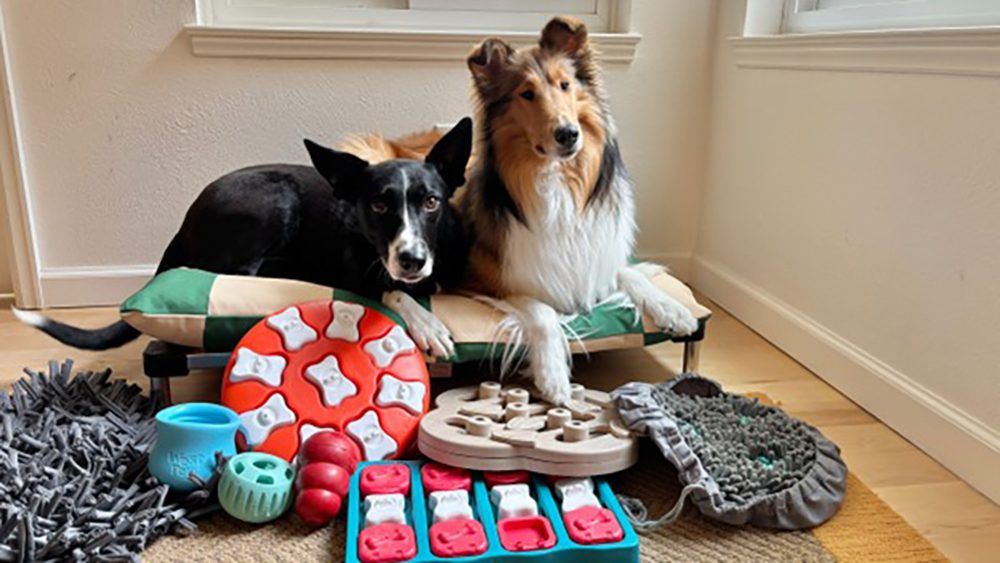
Enrichment refers to activities and environmental modifications that stimulate your dog's natural behaviors — sniffing, foraging, problem-solving, exploring, and socializing. Think of it as exercise for the brain.
The benefits of regular mental enrichment include:
- Reduced anxiety and stress — a mentally tired dog is a calm dog.
- Fewer behavioral problems — destructive behaviors often decrease when dogs have appropriate outlets for their energy.
- Improved confidence — solving puzzles and overcoming challenges builds your dog's self-assurance.
- Stronger bond with you — interactive enrichment activities are quality time that deepens your relationship.
- Better overall health — mental stimulation has been shown to slow cognitive decline in aging dogs.
1. Snuffle Mats and Foraging Games
Dogs have an incredible sense of smell — up to 100,000 times more sensitive than ours. Snuffle mats and foraging games tap into this natural superpower, turning mealtime into a brain-engaging activity.
:strip_icc()/sps-snuffle-mats-test-dognmat-taco-cara-milhaven-5_crop-075f57e4cd2d4fe9b9fbbdfad36fd951.jpeg)
How to do it:
- Snuffle mat: Scatter your dog's kibble or small treats throughout a snuffle mat (a fabric mat with deep folds and pockets). Your dog uses their nose to find each piece, turning a 30-second meal into a 15-minute brain workout.
- Scatter feeding: Instead of using a bowl, scatter your dog's food across the yard or a safe indoor area. This mimics natural foraging behavior.
- Muffin tin game: Place treats in a muffin tin and cover each cup with a tennis ball. Your dog has to figure out how to remove the balls to get the treats.
- Towel roll-up: Lay treats along a towel, roll it up, and let your dog unroll it to find the goodies.
Why it works: Nose work is one of the most mentally tiring activities for dogs. Just 15 minutes of sniffing can be as tiring as an hour-long walk!
2. Puzzle Toys and Interactive Feeders
Puzzle toys challenge your dog to solve a problem to earn a reward. They come in various difficulty levels, from beginner to expert, so you can gradually increase the challenge as your dog gets better.
Popular options include:
- Kong toys: Stuff a Kong with peanut butter (xylitol-free), wet food, or mashed banana and freeze it for a long-lasting challenge.
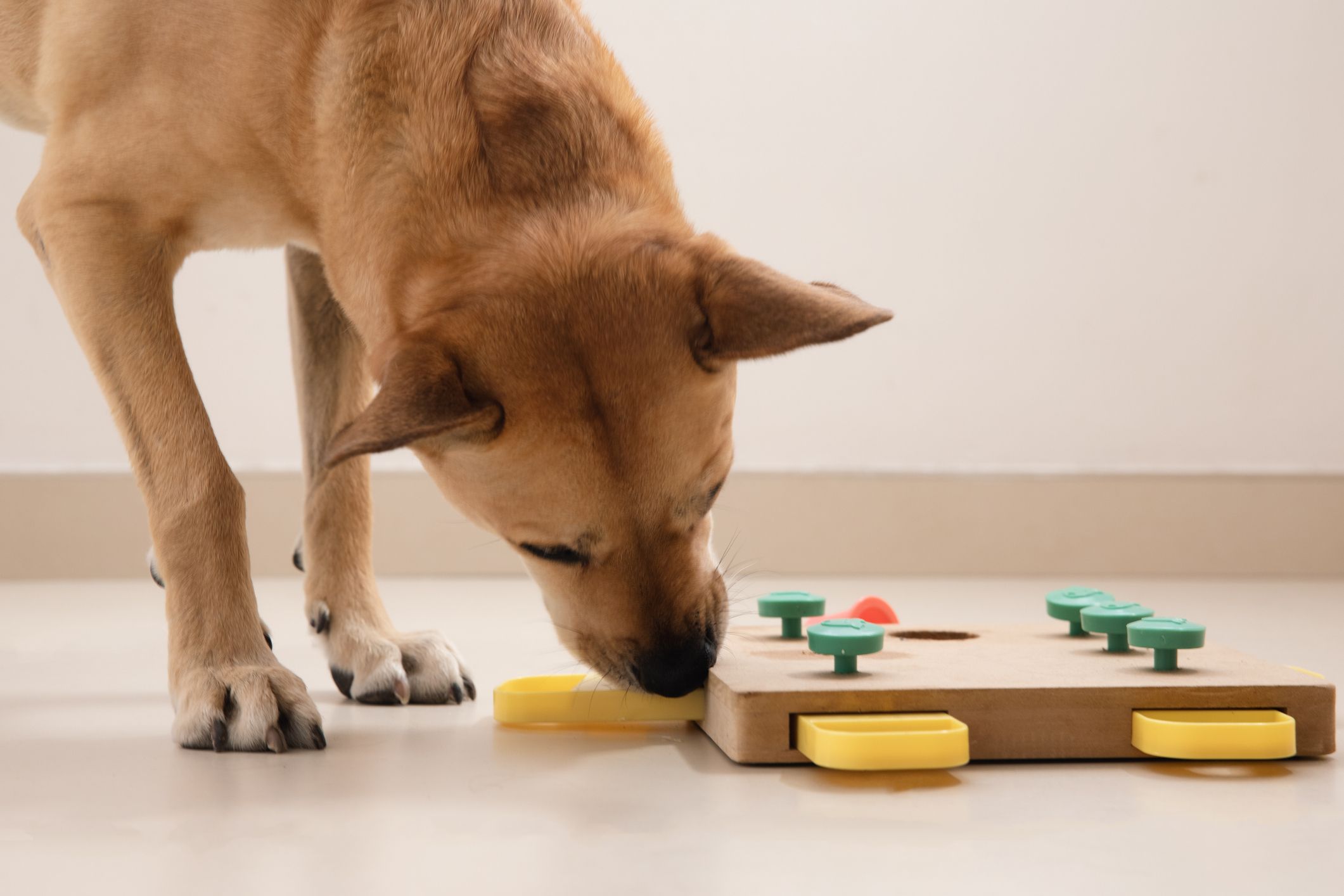
- Sliding puzzle toys: Your dog moves sliders, lifts flaps, or turns knobs to reveal hidden treats.
- Treat-dispensing balls: As your dog rolls the ball, treats fall out at random intervals, keeping them engaged.
- Lick mats: Spread soft food on a textured mat. The licking action is calming and mentally engaging.
Pro tip: Rotate puzzle toys every few days to prevent boredom. A toy that's been "solved" loses its appeal, but bringing it back after a break makes it exciting again.
3. Scent Games and Nose Work
Scent work is one of the fastest-growing dog sports, and for good reason — it's accessible to dogs of all ages, breeds, and fitness levels. You don't need any special equipment to get started.
Easy scent games to try:
- "Find it" game: Have your dog sit and stay while you hide treats around the room. Release them with "Find it!" and watch them use their nose to track down every piece.
- Cup game: Place a treat under one of three cups. Shuffle the cups and let your dog find the treat. Start easy and increase difficulty.
- Scent trail: Drag a treat along the ground to create a scent trail, then hide the treat at the end. Your dog follows the trail to the reward.
- Hide and seek: Have someone hold your dog while you hide. Call your dog's name and let them find you. This combines recall training with scent work!
Why it works: Scent work engages the part of your dog's brain dedicated to processing smells — which is a huge portion of their cognitive capacity. It builds confidence, reduces anxiety, and provides a satisfying mental workout.
4. Training Sessions as Enrichment
Training isn't just for puppies — dogs of all ages benefit from learning new skills. Training sessions are one of the best forms of mental enrichment because they combine problem-solving, focus, and the reward of your attention.
Ideas for enrichment training:
- Teach new tricks: Shake, spin, roll over, play dead, wave — the possibilities are endless. Even senior dogs can learn new tricks!
- Shape behaviors: Instead of luring your dog into a position, reward small steps toward the desired behavior. This encourages your dog to think and experiment.
- Practice impulse control: Games like "wait" (placing a treat on the floor and having your dog wait for permission to eat it) build patience and self-control.
- Learn the names of toys: Teach your dog to identify and retrieve specific toys by name. Start with one toy and gradually add more.
Pro tip: Keep training sessions to 5-10 minutes and always use positive reinforcement. A well-fitted EcoBark harness makes training walks comfortable and enjoyable for both of you.
5. Exploration Walks (Sniff Walks)
Not every walk needs to be about exercise. "Sniff walks" — also called decompression walks — are walks where your dog gets to set the pace and follow their nose wherever it leads.
:strip_icc()/spruce-pets-loose-leash-2025-20dd75b9d9c94a9da81a2cfb0e8f8504.png)
How to do a sniff walk:
- Choose a safe area — a quiet park, nature trail, or even a new neighborhood.
- Use a longer leash (6-10 feet) to give your dog more freedom to explore.
- Let your dog stop and sniff as much as they want. Resist the urge to pull them along.
- Follow their lead — let them choose the direction and pace.
- Use a comfortable harness like EcoBark's no-pull harness that allows natural movement without restricting their ability to sniff and explore.
Why it works: Sniffing is your dog's primary way of experiencing the world. A 30-minute sniff walk can be more mentally satisfying than an hour of structured walking. It reduces stress, builds confidence, and satisfies your dog's natural curiosity.
Creating an Enrichment Routine
The key to effective enrichment is variety and consistency. Here's a simple weekly enrichment schedule to get you started:
- Monday: Snuffle mat breakfast + short training session
- Tuesday: Puzzle toy + sniff walk
- Wednesday: Scent game (hide and seek or find it) + frozen Kong
- Thursday: New trick training + scatter feeding
- Friday: Exploration walk in a new area + lick mat
- Weekend: Combine activities — a long sniff walk followed by a puzzle toy, or a training session in a new environment.
Remember, enrichment doesn't have to be complicated or expensive. Many of the best activities use items you already have at home — towels, muffin tins, cardboard boxes, and your dog's regular kibble.
Gear Up for Enrichment With Secret Haven Shop
Great enrichment starts with great gear. At Secret Haven Shop, our EcoBark harnesses are designed for comfort and freedom of movement — perfect for sniff walks and exploration adventures. Our lightweight leashes give your dog room to explore while keeping them safe, and our eco-friendly collars ensure your pup is always stylish and identifiable.
Ready to enrich your dog's life? Browse our collection today and discover products that make every walk, game, and adventure more enjoyable for you and your furry friend. 🐾🧩🐕


