


Congratulations — you've brought home a new puppy! Those tiny paws, that wagging tail, and those irresistible puppy eyes are about to change your life in the most wonderful way. But along with all the cuddles and playtime comes an important responsibility: training.
Proper training isn't just about teaching your puppy tricks — it's about building a foundation of communication, trust, and good behavior that will last a lifetime. At Secret Haven Shop, we're here to help you start this journey on the right paw. Here's your complete guide to puppy training in 2026.
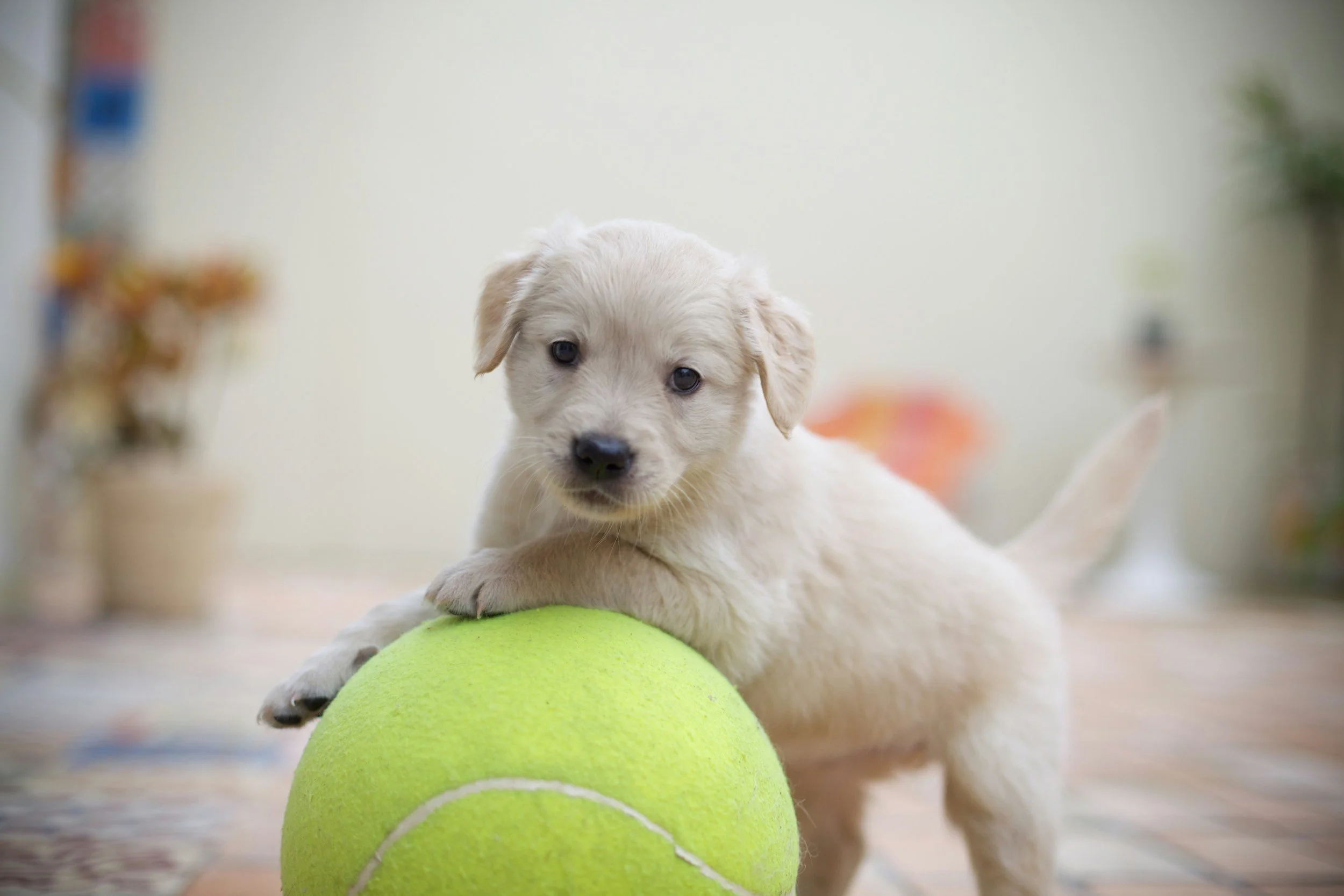
When Should You Start Training Your Puppy?
The short answer: immediately! Puppies can begin learning basic commands as early as 8 weeks old. In fact, the critical socialization window — between 3 and 14 weeks — is the most important period for shaping your puppy's behavior and temperament.
Don't wait until your puppy develops bad habits. Start with simple commands and short training sessions (5-10 minutes) several times a day. Puppies have short attention spans, so keep it fun and positive!
The Golden Rules of Puppy Training
Before diving into specific commands, here are the fundamental principles that make training effective:
- Use positive reinforcement: Reward desired behaviors with treats, praise, and play. Punishment-based methods create fear and damage your bond.
- Be consistent: Use the same words and hand signals every time. Make sure everyone in the household follows the same rules.
- Keep sessions short and fun: 5-10 minutes, 3-5 times per day is more effective than one long session.
- Be patient: Puppies are babies. They will make mistakes. Stay calm and redirect rather than punish.
- End on a positive note: Always finish training sessions with a command your puppy knows well, so they feel successful.
The 5 Essential Commands Every Puppy Should Learn
1. Sit
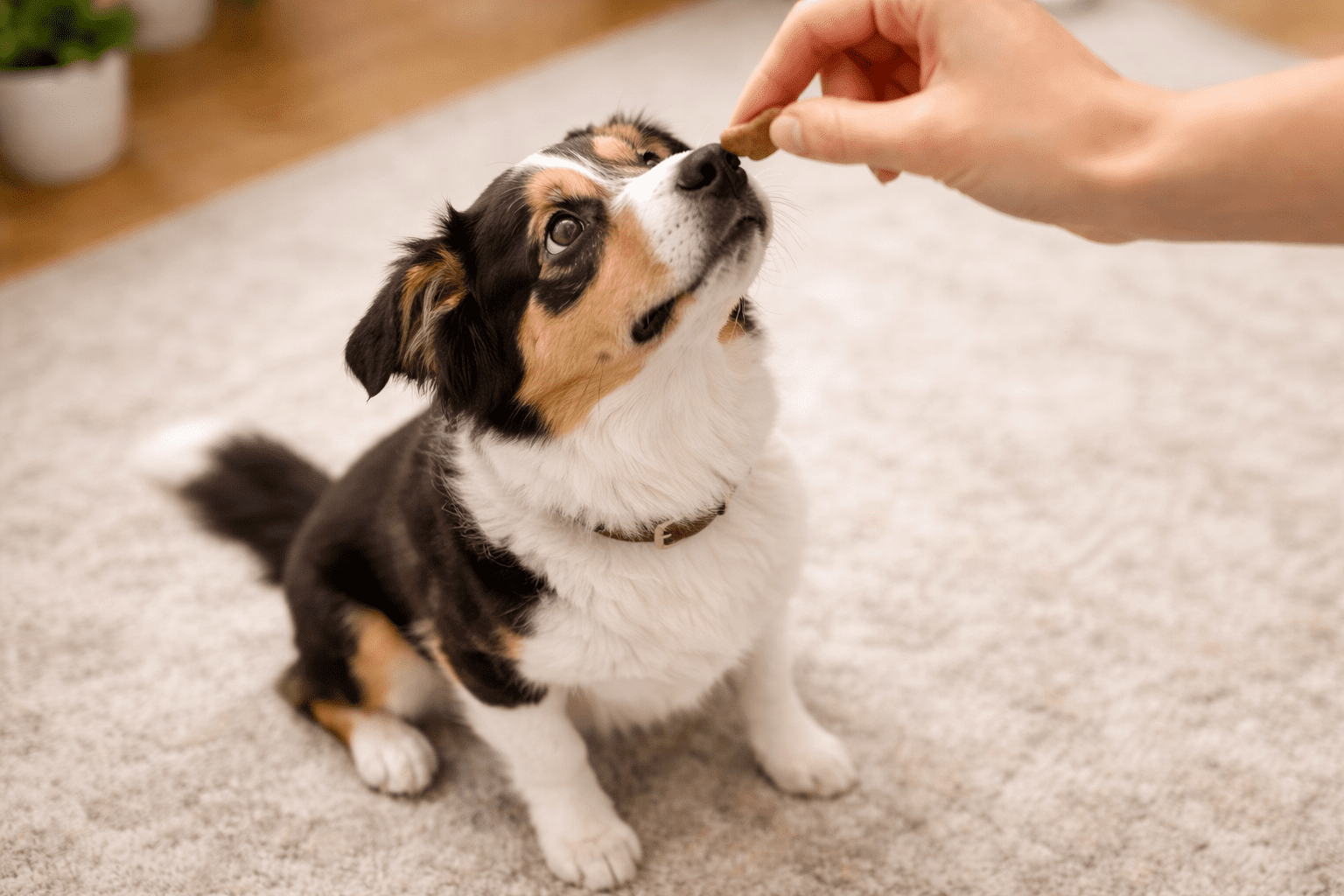
"Sit" is usually the first command puppies learn, and it's the foundation for many other behaviors. Here's how to teach it:
- Hold a treat close to your puppy's nose.
- Slowly move the treat upward and slightly back over their head.
- As their head follows the treat, their bottom will naturally lower to the ground.
- The moment their bottom touches the floor, say "Sit," give the treat, and offer enthusiastic praise.
- Repeat 5-10 times per session until your puppy responds reliably.
2. Stay
"Stay" teaches impulse control and is essential for safety. Build this command gradually:
- Ask your puppy to sit.
- Hold your palm out in front of you and say "Stay."
- Take one step back. If your puppy stays, immediately return and reward.
- Gradually increase the distance and duration over multiple sessions.
- If your puppy breaks the stay, calmly reset and try again with less distance.
3. Come (Recall)
A reliable recall can literally save your dog's life. Start teaching it early:
- Get down to your puppy's level and say "Come!" in an excited, happy voice.
- When they come to you, reward generously with treats and praise.
- Practice in a safe, enclosed area before trying it outdoors.
- Never call your puppy to you for something unpleasant (like bath time or nail trimming) — you want "come" to always mean good things.
4. Down
"Down" is a calming command that's useful in many situations:
- Start with your puppy in a sit position.
- Hold a treat in front of their nose and slowly lower it to the ground.
- As they follow the treat down, slide it along the ground away from them.
- When their elbows touch the floor, say "Down," give the treat, and praise.
5. Leave It
"Leave it" prevents your puppy from picking up dangerous items, eating things they shouldn't, or bothering other animals:
- Place a treat in both hands. Show your puppy one closed fist with a treat inside.
- When they sniff, lick, or paw at your hand, say "Leave it" and wait.
- When they stop trying and pull away, reward them with the treat from your other hand.
- This teaches them that ignoring something leads to an even better reward.
Leash Training: Walking Like a Pro
Leash training is one of the most important skills your puppy will learn. A dog that walks nicely on a leash is a joy to be around — and it starts with the right equipment and technique.
- Start indoors: Let your puppy wear their harness and leash around the house to get comfortable with the feeling.
- Use a harness, not a collar: Puppies tend to pull, and a harness prevents neck strain and choking. EcoBark's adjustable harnesses are perfect for growing puppies — they're soft, comfortable, and easy to adjust as your pup grows.
- Reward walking beside you: When your puppy walks calmly at your side, mark the behavior with a treat and praise.
- Stop when they pull: If your puppy pulls on the leash, stop walking immediately. Only resume when the leash is loose. This teaches them that pulling gets them nowhere.
- Be patient: Leash training takes time. Short, positive sessions are more effective than long, frustrating ones.
Socialization: The Key to a Well-Adjusted Dog
Socialization is arguably the most important aspect of puppy development. A well-socialized puppy grows into a confident, friendly adult dog. During the critical socialization period (3-14 weeks), expose your puppy to:
- Different people (men, women, children, people wearing hats, uniforms, etc.)
- Other vaccinated, friendly dogs
- Various environments (parks, pet stores, busy streets, quiet neighborhoods)
- Different surfaces (grass, gravel, tile, carpet, metal grates)
- Common sounds (vacuum cleaners, doorbells, traffic, thunder recordings)
Always make socialization experiences positive. If your puppy seems scared, don't force the interaction — let them observe from a comfortable distance and reward calm behavior.
House Training Basics
House training requires consistency, patience, and a good routine:
- Take your puppy outside frequently: After waking up, after meals, after play sessions, and every 1-2 hours in between.
- Choose a designated potty spot and take your puppy there every time.
- Praise and reward immediately when they go in the right place.
- Supervise constantly when indoors. If you can't watch your puppy, use a crate.
- Clean accidents thoroughly with an enzymatic cleaner to remove odors that might attract your puppy back to the same spot.
_%20Young%20man%20is%20training%20his%20puppy%20walking%20.jpg)
Common Puppy Training Mistakes to Avoid
- Inconsistency: If "no jumping" means no jumping, it means no jumping for everyone, every time.
- Training when frustrated: If you're getting frustrated, take a break. Your puppy can sense your emotions.
- Repeating commands: If you say "sit" five times before your puppy responds, you're teaching them that "sit" means "sit eventually." Say it once, wait, then help them into position if needed.
- Skipping socialization: This window closes quickly. Make it a priority.
- Using the crate as punishment: The crate should be a safe, positive space — never a place of punishment.
Set Your Puppy Up for Success With the Right Gear
Great training starts with great equipment. At Secret Haven Shop, our EcoBark puppy harnesses are designed to grow with your pup — featuring adjustable straps, soft padding, and eco-friendly materials that are gentle on your puppy's developing body. Pair it with one of our lightweight, durable leashes for the perfect training setup.
Browse our collection today and give your new puppy the best start in life. Because every great dog starts as a well-trained puppy! 🐾🎓


